ET Conversations at ETLI: What’s in a name: Engineer, Engineering Technologist, Technician

The Engineering Technology Leadership Institute (ETLI) is a council under the Division of Engineering Technology (ETD) in the American Society of Engineering Education (ASEE). This group meets annually to focus on national policy issues around engineering technology education including engineering technology professionals, issues surrounding accreditation, licensure, occupational codes (and definitions of those occupations), and other timely topics. Recently, research and conversation on these topics has become overlayed and somewhat complicated with the impact of smart factories, automated and connected “systems”, and Industry 4.0 technologies.

With the emergence of manufacturing integrated systems, many new industrial positions and job titles have been created in attempts to better define various collections of skills needed to perform current industry tasks. It takes time to get these technical personnel re-aligned to effectively and efficiently with the new technologies simplifying or eliminating some tasks while making others more complex. It generates challenges as the new positions merge some skills that belonged to different jobs. This juggling, jumbling, and perhaps jousting of tasks and skills needed for various “jobs” raises questions about the strict traditional definitions of “engineer” and the working definitions of engineers, engineering technologists, and engineering technicians as well as their roles in the emerging skilled technical workforce now needed to support full implementation of Industry 4.0 technologies.

As Industry 4.0 technologies roar into all industries, there continues to be dizzying conversations about who can be licensed, and when, and with what education. In recent years, academic training for B.S. degrees in Engineering and Engineering Technology very much supported the notion that engineers “designed” things or systems, and therefore should be “licensed”. Engineering technologists, on the other hand, do more of the hands-on application and implementation of “designed” technologies and processes. Engineering technicians, the occupation assigned to graduates of 2-year associate technical degrees in engineering technology, typically support engineers and technologists. This hierarchy is defined in the Standard Occupation Codes (SOC) established by the Department of Labor’s Bureau of Labor Statistics (BLS) and is recognized by the US government hiring guidelines. It is also used by ABET. However, there are two immediate reality checks in play. First, many industries have hired and continue to hire, graduates from B.S. engineering and engineering technology programs into the same position. More and more companies are adopting the same guidelines in the very competitive employee market and the need for a more multi-skilled and interdisciplinary technical workforce. Second, the actual title, engineering technologist, is not used in many industry situations or academic programs. To further complicate the issue, some 2-year engineering technology graduates are being hired into “engineer” positions.

ETLI is one organization within the American Society of Engineering Education that is working to make sure that B.S. Engineering Technology graduates are welcome into all engineering careers. This group represents over 200 ABET (Accreditation Board for Engineering and Technology) 2-year Engineering Technology degree and over 400 B.S Engineering Technology degree programs in the US. The ETLI is specifically focused on bringing the B.S. Engineering Technology degree holder to the same recognition level as the B.S. Engineering degree holder relative to engineering career and licensing opportunities.

There are many organizations working to keep up with the need for engineering and technology in the world. The recent changes in over 30 states’ licensure rules, providing access to professional engineer licensure for B.S. ET graduates, is an endorsement of support from the current U.S. engineering workforce for these graduates to be able to work as engineers. The recent completion of a career path for A.S. ET degree, through the B.S. ET degree and a straightforward route to an Engineering Professional License for B.S. ET degree holders in Florida indicates that Florida is very serious about creating a world class technical workforce to support manufacturing in Florida. FLATE is extremely proud of the role it played in making this happen. You can learn more about Florida Engineering Licensure from the Florida Board of Professional Engineers. link: https://fbpe.org/

Guided Particle Systems Inc's Unique Partnership with Pensacola State College Provides Benefits to All

Zach Gravitt, Spring 2022 Intern
When Guided Particle Systems Inc. (GPSI) had their facility severely damaged by Hurricane Sally in September 2020, David Fries, Guided Particle’s CEO, proposed moving the facility to Pensacola State College (PSC) and developing a collaborative relationship with the college. “College campuses have a certain energy not found in industrial parks or traditional office space,” says Mr. Fries, “Partnering with PSC provides access to a diverse range of students, often with prior work experience, who are preparing for their next career stage. In addition to a potential workforce, the company has access to prototyping facilities and opportunities to seek funding for collaborative projects.” The Board of Directors voted unanimously in favor of the novel arrangement and Guided Particle moved into a former chemistry classroom in PSC’s Collegiate High School building in February 2021. In September 2022, the company expanded operations into a second classroom in the same building.

While GPSI occupies space on campus under a lease agreement with Pensacola State College, it is not doing so under a typical incubator or accelerator model. “The college is leasing space to Guided Particle on-campus in an effort to make certain internship opportunities are available to students enrolled in ET programs to allow them to gain first-hand experience and apply knowledge learned in the classroom,” says PSC’s Workforce Director, Michael Listau. The company has operations that take place on campus including research and development in the physical, engineering, and life sciences, and being housed on the colleges campus makes these opportunities available to students.

Guided Particle has a wide variety of projects it is involved with, from robotics and automation to field-portable environmental sensors. Depending on their experience and interest, students have opportunities for hands-on experience in mechanical design, research, programming, machine learning, 3D printing, IT, field deployment of instrumentation, electronics assembly, technical sales, and more. Per the lease agreement, GPSI commits to employ at least one student intern at all times. All of the student interns to date have been from the college’s Engineering Technology program.

Beyond the lease agreement, an informal relationship has evolved where the company writes letters of support for grant proposals relevant to its business and participates in student events on campus. In addition, the company’s CEO teaches a robotics course at the college and the company hosts an open house for Engineering Technology students during National Engineers Week in February. In August 2022, the company sponsored a group of robotics students to tour the Airbus factory in Mobile, AL with the Alabama chapter of the Society of Manufacturing Engineers.

Both the college and Guided Particle see the collaborative relationship continuing and are in conversations about further expansion. According to Mr. Fries, GPSI is exploring new ways to expand the partnership and create new opportunities for students, workforce development, and the regional economy.

FLATE to Present at the 2022 Engineering Technology Leaders Institute (ETLI)

The Florida Advanced Technological Education (FLATE) Center, a part of the FloridaMakes Network, will present at the 2022 Engineering Technology Leaders Institute (ETLI), hosted by the Engineering Technology Council (ETC) of the American Society for Engineering Education (ASEE), the international organization for Engineering Education. The 2022 ETLI annual meeting will be held September 28-30, 2022, in Alexandria, VA.

The ETLI is a dedicated annual meeting of stakeholders in engineering technology education. During the meeting, participants from community colleges, companies, professional organizations, and four-year schools promote and discuss high quality engineering technology education to support students, their families, and the companies they will join.

Dr. Marilyn Barger, Senior Education Advisor of FLATE, has been invited to present, along with Dr. Richard Gilbert from the University of South Florida, on Industry Identified Skills Gaps and Education Pipeline Response. Dr. Barger’s and Dr. Gilbert’s session will cover a National Science Foundation funded study on manufacturer identified skills gaps related to Industry 4.0 technology driven applications. The results apply to programs at community colleges and universities. Their presentation will demonstrate the project’s outcomes in Florida and its implementation strategies. Details on the survey and caucus process used as analytics tools will also be provided.

“The manufacturing and manufacturing services sectors have been impacted by the emergence of Industry 4.0 technologies, altering the traditional expectations of new graduates entering the field,” said Dr. Barger. “Technician and engineer preparation programs now need to invest significant effort covering fundamental skills and supportive knowledge of these technologies so that graduates can meet the initial employer expectations in their first job. Educators must be cognizant of the current workplace skills needed in the industry as well as additional skills needed to adapt to new technologies emerging in the next few years.“

According to Dr. Barger’s and Dr. Gilbert’s planned presentation, community college technical programs in Engineering Technology must follow documented regional workforce needs and adapt accordingly. These technician programs zero-in on the necessary skills graduates need to immediately start work in a manufacturing facility. Faculty regularly cross-reference with other programs across the country, utilize Department of Labor competency models, and research skill standards that define national manufacturing credentials to validate and define technical skills to include in their programs.

To register for ETLI, click here.  

For more information, please contact Dr. Marilyn Barger, Senior Education Advisor, Florida Advanced Technological Education Center at marilyn.barger@flate.org.

STEM from Dance Summer Camp at USF

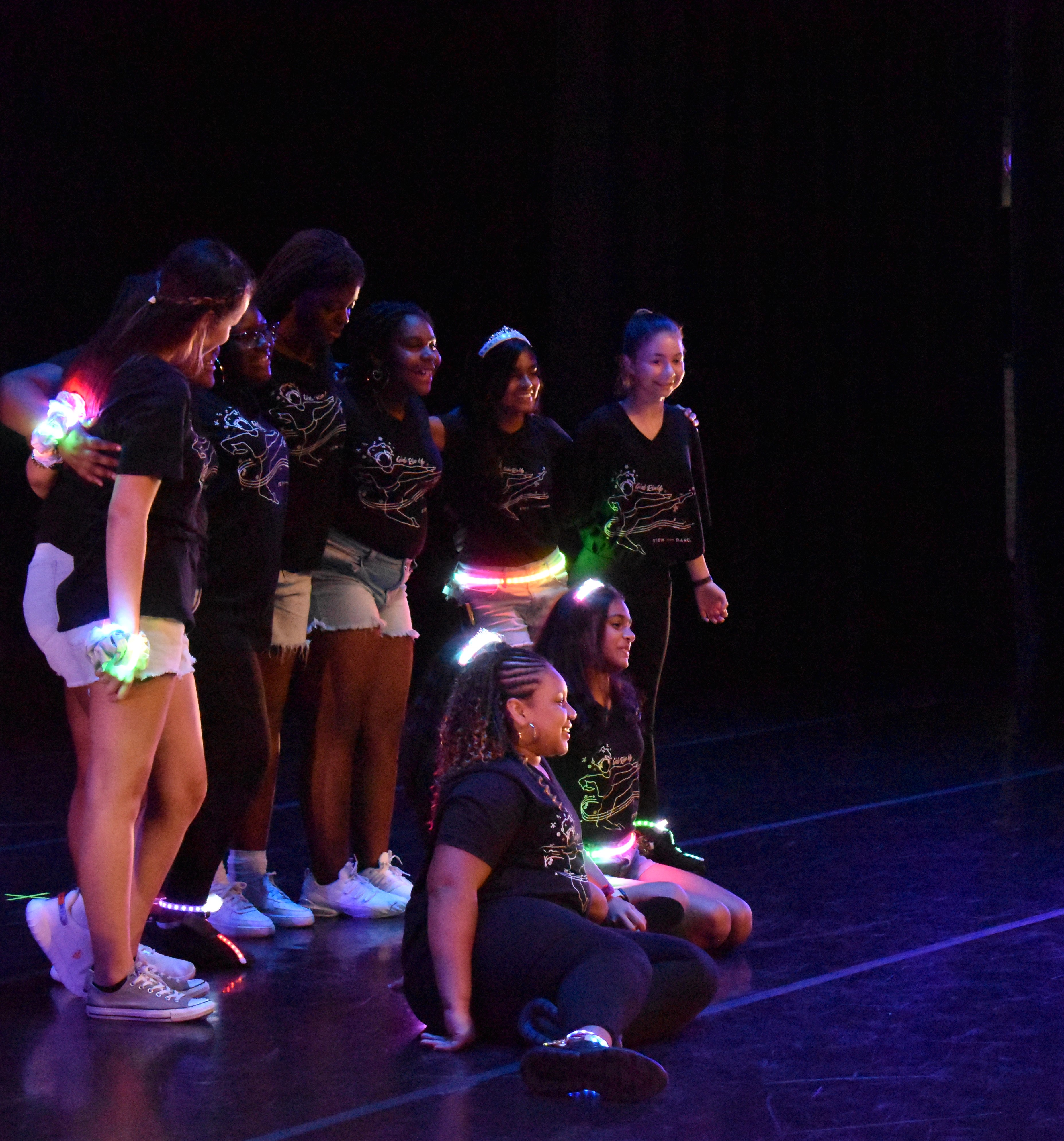
The University of South Florida (USF) College of Engineering Mechanical Engineering Department, under the leadership of Dr. Nancy Diaz-Elsayed, hosted a 3-week summer STEM from Dance camp for middle school girls. The thirteen girls from around Hillsborough County attended the camp spending their mornings learning to code wearables in the mornings and their afternoons learning and practicing a variety of dance moves. 

Part of this national program is to have invited guest speakers talk to the girls about their STEM careers. Dr. Barger, FLATE Senior Educational Advisor, said that it was an honor to address the young STEM Dancers at USF and share their enthusiasm for all that they were learning.

The camp culminated with a dance production that showcases both what they have learned in dance and STEM. The STEM coding activities included programming strips of multicolor LED lights that ultimately be part of their “costumes” for the final performance as belts, hair decorations, tierras, and more! Be on the lookout for information about the 2023 STEM from Dance Summer camp at USF.

More information Stem from Dance can be found on their website: https://www.stemfromdance.org/