
I have
covered apprenticeships and internships in detail the past two months, but perhaps
it is time to take a break this month and highlight the 5th annual
High Impact Technology
 Exchange conference (www.highimpact-tec.org) held July
20-24 in Austin, TX. This conference was established, is organized and sponsored
by the National Science Foundation (NSF) Advanced Technological Education (ATE)
Centers to meet the needs of educators that teach, or are involved with
advanced technological education at the secondary and post-secondary levels. Over
500 attendees convened for four days of workshops, tours, presentations, meetings,
exhibits, and networking. Conference trademarks that contribute to its success
include: tightly focused sessions on trends in new technologies, pedagogies,
strategies for working with industry and other partners, grant management and
implementation, industry site visits that get people talking, and recognition awards
for those who have gone above and beyond the call of duty.
Exchange conference (www.highimpact-tec.org) held July
20-24 in Austin, TX. This conference was established, is organized and sponsored
by the National Science Foundation (NSF) Advanced Technological Education (ATE)
Centers to meet the needs of educators that teach, or are involved with
advanced technological education at the secondary and post-secondary levels. Over
500 attendees convened for four days of workshops, tours, presentations, meetings,
exhibits, and networking. Conference trademarks that contribute to its success
include: tightly focused sessions on trends in new technologies, pedagogies,
strategies for working with industry and other partners, grant management and
implementation, industry site visits that get people talking, and recognition awards
for those who have gone above and beyond the call of duty.
FLATE will organize an expanded mechatronics program for HiTEC 2014. Stay tuned for more mechatronics and “mech” community building in the coming months and plan to join us at HiTEC 2014 next July in Chicago. I’d like to thank my colleagues who helped make this year's effort happen including our panel: Ernie Friend (FSCJ); Dan Horine (VWCC) and Niaz Latif (PUC) for sharing the interworking of their own programs. A special thank-you to everyone who enthusiastically provided information during the “Mechatronics Moments” pre-conference session that dramatically changed the image of mechatronics. Kudos and many thanks to LabVolt for its support and each of you and your teams for your incredible contributions! Rest assured the Mechatronics Moments pre-conference session will be back next year!
FLATE was also extremely pleased to have Michael Ennis, manufacturing engineer at Harris Corporation chosen for the prestigious Industry Recognition Award at HiTEC. This national award recognizes an industry partner that provides exceptional support to technician education and the students in our technical programs. I am sure that there are many deserving folks out there that meet the criteria, but we are very proud that Michael was selected for this honor at HiTEC 2013. We think all of our industry partners are winners, but are truly happy to have Mike recognized in a national venue like HiTEC. Congratulations Mike Ennis!
Now it's time to sit back, relax and enjoy this August issue of the FLATE Focus. For those of you have been anxiously waiting, the solution to STEM puzzle #35 is revealed! We also showcase many of our summer professional development activities and our student robotics camps, not to mention the incredible teachers and young people who participated. An overview of the recently released National STEM Strategic Plan is also provided in this month issue.
PLEASE NOTE: This is the final (YES last 30 days) to submit your nominations for FLATE’s Educator and Distinguished Industry Partner awards. Click here to go right to the online nomination form, and recognize your colleagues and/or peers.
FLATE
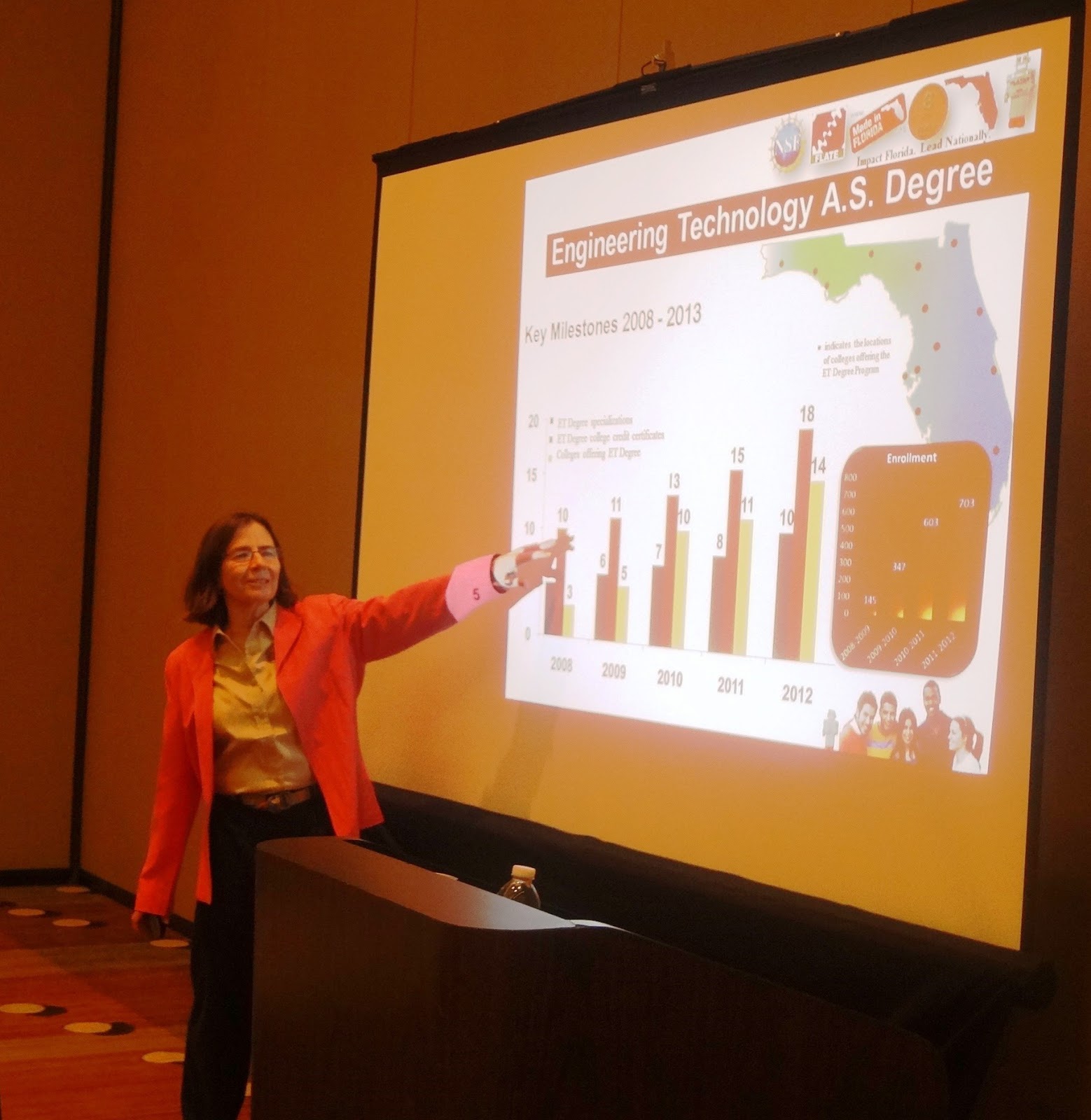
took the 2013 conference opportunity to open a nationwide, cross-country
conversation on mechatronics. Ninety five interested folks attended our panel
session designed to explore mechatronics programs across the country and its
emerging role as an enabling technology cluster that supports a variety of technology
disciplines. The interest in the panel was electrifying and sparked
conversations and connections for the following three days that will put new
focus on mechatronics and mechatronics related technologies for the coming
years across the country.
FLATE will organize an expanded mechatronics program for HiTEC 2014. Stay tuned for more mechatronics and “mech” community building in the coming months and plan to join us at HiTEC 2014 next July in Chicago. I’d like to thank my colleagues who helped make this year's effort happen including our panel: Ernie Friend (FSCJ); Dan Horine (VWCC) and Niaz Latif (PUC) for sharing the interworking of their own programs. A special thank-you to everyone who enthusiastically provided information during the “Mechatronics Moments” pre-conference session that dramatically changed the image of mechatronics. Kudos and many thanks to LabVolt for its support and each of you and your teams for your incredible contributions! Rest assured the Mechatronics Moments pre-conference session will be back next year!
FLATE was also extremely pleased to have Michael Ennis, manufacturing engineer at Harris Corporation chosen for the prestigious Industry Recognition Award at HiTEC. This national award recognizes an industry partner that provides exceptional support to technician education and the students in our technical programs. I am sure that there are many deserving folks out there that meet the criteria, but we are very proud that Michael was selected for this honor at HiTEC 2013. We think all of our industry partners are winners, but are truly happy to have Mike recognized in a national venue like HiTEC. Congratulations Mike Ennis!
Immediately
following HiTEC the FLATE team scurried from Austin to Ponte Vedra, FL, for
 the
annual Florida Association for Career and Technical Education conference to
present our activity packed workshop focused on integrating Manufacturing
Skills Standard Council (MSSC) into our Florida high school curriculum. Neil
Reddy, executive director of MSSC presented an overview of MSSC and CPT credentials,
while Ted Norman, state supervisor for manufacturing, transportation and logistics,
did the same for the Florida Department of Education curriculum frameworks. Aaron Bowman from JAXUSA Partnership gave workshop participants a
wonderful snapshot about the manufacturing industry in the greater Jacksonville
area. Three teachers, Jack Clark from Treasure Coast High School, Dale Toney
from Marion Technical Institute, and Russ Hernderlite from Petersen Academy in
Jacksonville, lead an intense panel conversation on their best practices for
implementing and integrating the four MSSC tests into their Automation and
Production Technology aligned programs. Two intense hands-on activities filled
out the day as well as provided the seeds for some shared resources for our
manufacturing high school partners. Thanks to the FACTE organization team for
their help.
the
annual Florida Association for Career and Technical Education conference to
present our activity packed workshop focused on integrating Manufacturing
Skills Standard Council (MSSC) into our Florida high school curriculum. Neil
Reddy, executive director of MSSC presented an overview of MSSC and CPT credentials,
while Ted Norman, state supervisor for manufacturing, transportation and logistics,
did the same for the Florida Department of Education curriculum frameworks. Aaron Bowman from JAXUSA Partnership gave workshop participants a
wonderful snapshot about the manufacturing industry in the greater Jacksonville
area. Three teachers, Jack Clark from Treasure Coast High School, Dale Toney
from Marion Technical Institute, and Russ Hernderlite from Petersen Academy in
Jacksonville, lead an intense panel conversation on their best practices for
implementing and integrating the four MSSC tests into their Automation and
Production Technology aligned programs. Two intense hands-on activities filled
out the day as well as provided the seeds for some shared resources for our
manufacturing high school partners. Thanks to the FACTE organization team for
their help.

Now it's time to sit back, relax and enjoy this August issue of the FLATE Focus. For those of you have been anxiously waiting, the solution to STEM puzzle #35 is revealed! We also showcase many of our summer professional development activities and our student robotics camps, not to mention the incredible teachers and young people who participated. An overview of the recently released National STEM Strategic Plan is also provided in this month issue.
PLEASE NOTE: This is the final (YES last 30 days) to submit your nominations for FLATE’s Educator and Distinguished Industry Partner awards. Click here to go right to the online nomination form, and recognize your colleagues and/or peers.


