Making A Difference: The Haiti Earthquake Relief Effort

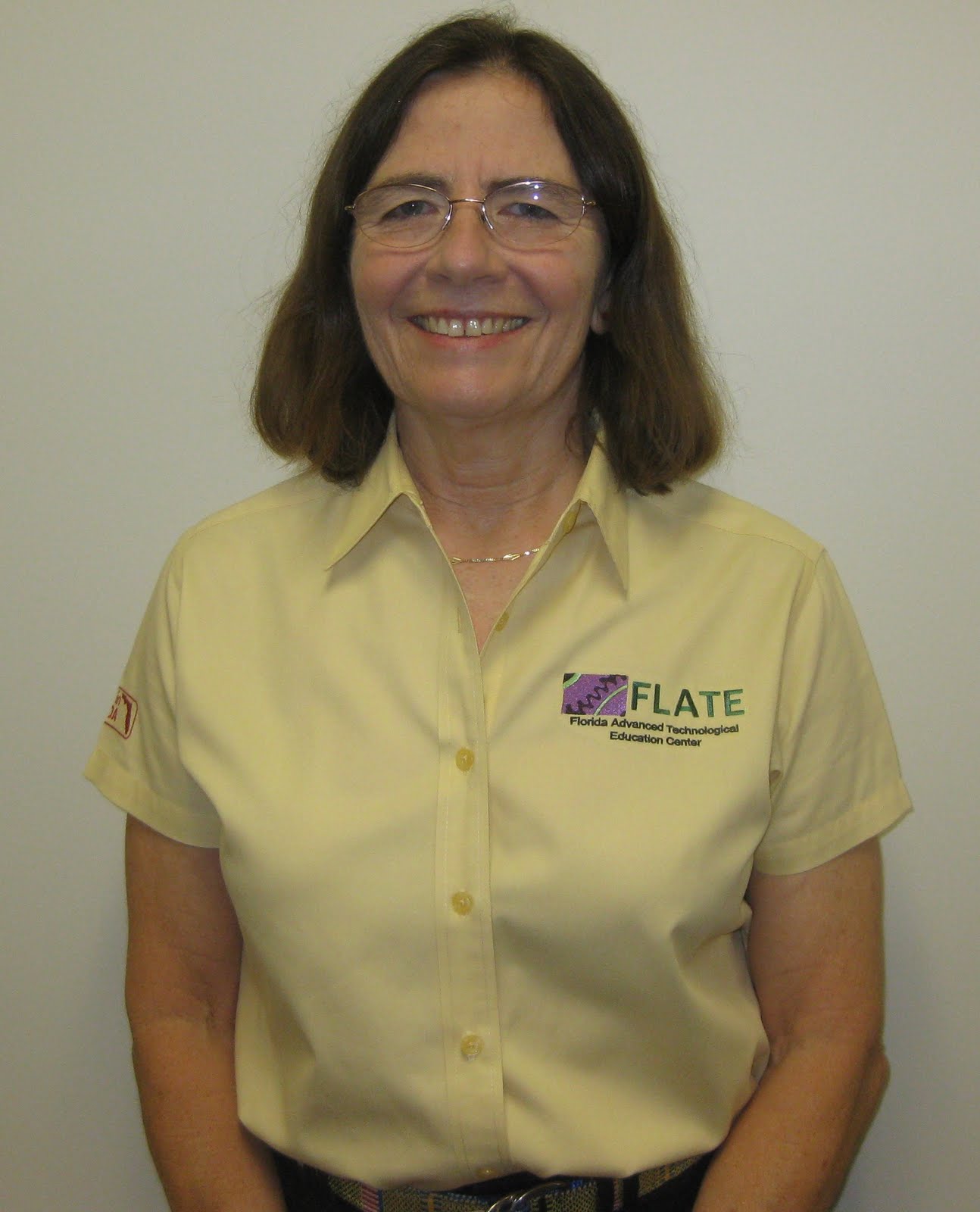
If “a journey of a thousand miles starts with a single step” Lourdes Fleurima has already taken her first steps towards fulfilling a life-long dream to “make a difference”. Fleurima who is the senior staff assistant for FLATE at Hillsborough Community College in Brandon, and a single mother of two says she always liked to help. That she says has been her passion since she was a child. Help she did, and in a big way!

In April 2010, she single-handedly organized a food and clothes drive to help the victims of the devastating magnitude 7.0 earthquake that crippled the lives of thousands in Haiti. The incident served as an epiphany of sorts. In that, shortly after the earthquake Fleurima made a flyer requesting for donated items for the victims of the Haiti earthquake, posted them at churches, at work, local community centers, and hosted garage sales at her residence. Her efforts evoked mass response from coworkers at HCC, church members, and neighbors alike. The Publix store in her neighborhood opened a drop box where people could donate food and clothes, a doctor in Land O’Lakes, FL donated pharmaceutical/medical products, and the local U-Haul store donated boxes and tapes to ship the items to Haiti. She even received donated items from a family in Indiana! “I got a lot of help from the community, and have been inspired by their acts of generosity” Fleurima said.

Since then she has traveled to Haiti twice to distribute the donated items, and has spent a considerable amount of money, out of her own pocket, to help the people of Haiti. “This is something I wanted to do, I am committed to do and will make it happen.” Approximately 1000 individuals in Leogane, Port Au-Prince, Carrefour, Saut-d’Eau, Hinche and several towns and villages across Haiti have received clothes, food and money thus far as a result of her efforts.

Indeed, Fleurima’s desire to reach out to the “poorest of the poor” started long before the devastating earthquake in Haiti. Starting with one suitcase of goods that she bought at local outlet stores to distribute to the people in Haiti, Fleurima has reached out to the needy for the past 10 years, one step at a time. She is currently in the process of establishing her own organization, Helpland Solutions which is poised to be operational by August, 2010. The organization’s primary mission will be to give every child a better life by “helping Haiti through the goodness of the heart”. Whether it is helping two, or 20 or 2000 kids, the organization’s primary focus will be providing “a home” not a mere “shelter” for orphans and children between the ages of 1-10.

Fleurima’s vision is highly diversified. Her audacity of hope extends beyond Haiti. In the next five years she intends to expand HLS from serving 25 to 100 kids. She intends to offer vocational programs (culinary, sewing and basic computer classes) free of cost for adolescents, as well as adult literacy programs that cultivate real-life skills. She even plans to open a non-denominational church. Her long-term plan is to offer similar services to orphans and underprivileged individuals not only in Haiti, but in Africa, India, and one day throughout the world. “I know I will not have a solution for everybody, or every child, but if I can have a solution for just one child, or teach one adult to read and write I will consider HLS to have fulfilled its mission to serve the underprivileged” Fleurima said.

Despite numerous challenges that are strewn along her path, failing she says is not in her vocabulary. “I want to go all the way, but I will go in the direction where God leads me to.” For information on Fleurima’s Haiti earthquake relief effort, or to donate to Helpland Solutions contact Lourdes Fleurima, president & CEO of Helpland Solutions at lfleurima@fl-ate.org.

From the Executive Director's Desk

Recently the National Governors Association Center for Best Practices (the NGA Center) published a report entitled: “A Sharper Focus on Technical Workers: How to Educate and Train for a Global Economy.” The report is based on one of the NSF ATE Centers, AMTEC (Automotive Manufacturing Technical Education Collaborative) as a model of how academic institutions, industry, and state governments can work together to provide skills training for workers, and help secure the country’s economic security and prosperity. “The global economy demands highly skilled workers, and states are in a position to help foster the types of education and training partnerships that can fill jobs in economic sectors that are growing at a rapid pace” reports John Thomasian, director of the NGA Center. Thomasian suggests collaboration may be the key to building competitive, highly skilled workforce. AMTEC, like all NSF ATE Centers, is built on and thrives on academic and industry partnerships. It is a national center with 30 college partners, and 34 auto-related facilities in 12 states working to implement improvements in technical education focused on advanced automotive manufacturing.

In addition to its reference to AMTEC, the report also shares actions that states can take to shape the future of technical training that will support large and fast-growing industries. These include championing the importance of technical education and its global nature; focusing on industry with the highest potential for economic growth; considering financial support for college faculty; growing multi-state partners that provide high-quality, industry-valued training; requiring comprehensive outcome data to assess skills and credentials gained, informing policy makers and holding educational institutions accountable. Congratulations! to AMTEC for their accomplishments, and, kudos to all the other centers and projects in the NSF ATE community that work in education-industry partnerships throughout the country and across the many facets of technical education to reach the same goal of improving technical education in innovative and creative ways to strengthen our American technician workforce. The NGA report is posted at: www.nga.org/center/ehsw.

In this issue of the FLATE Focus, you can read about FLATE-sponsored summer educator professional development workshops, robotics camps and outreach activities at the HCC Brandon Campus, MSSC credentials alignment with the engineering technology degree technical core courses, the Florida “Ready to Work” program which aligns with the NAM-endorsed Stackable Certificate System (SCS), and of course sTEm puzzle # 9. Also don’t forget HI-TEC conference the last week of this month in Orlando (www.highimpact-tec.org), and send in your nominations (http://www.fl-ate.org/projects/awards.html) for FLATE’s educator and industry partner awards before August 30 .

Transition of Biotechnology into Biomanufacturing….is it a passage into the future?

Biotechnology and biomanufacturing are among the most rapidly expanding industries in the nation. Over the past 40 years, the U.S. biotechnology industry has matured from its emphasis on basic and applied research, to develop products that impact our daily lives. (Source: The Center for Science Education).

So what is the lure and scope of this emerging biotech industry?

Bill Woodruff, department head for biotechnology at Alamance Community College in Graham, NC says determining the scope of biotechnology is like “reaching out into the universe.” The evidence is in the numbers. According to Woodruff, eight years ago only 12% of all pharmaceuticals in the market were biopharmaceuticals, the rest were all chemical type. Eight years later, in 2010, that number has risen to 37% and is expected to reach 87% by 2020. The industry undoubtedly holds promise and is highly diversified. Furthermore, biotechnology’s transition from its research and development-centric focus into “biomanufacturing” has transformed it into a sustainable, income-generating industry—one that offers endless opportunities.

Richard Connolly, a Ph.D. candidate currently pursuing a degree in biomedical engineering at the University of South Florida in Tampa agrees the field of biology has evolved and grown more complex than most people’s textual knowledge about the subject. This shift has tremendously broadened the scope of biology, and raised the need for a well-educated, trained workforce that is prepared to address the challenges of a new industry.

The biomanufacturing workshop for teachers at Hillsborough Community College (HCC), for example, was one such initiative designed to provide information and hands-on training in new advanced technology career paths in biomanufacturing. The workshop was held in June at HCC in Brandon as part of a professional development opportunity for 29 high school teachers from Hillsborough, Polk, Pasco and Hernando counties in Florida. It also represented a cohesive partnership between Northeast Biomanufacturing Center and Collaborative (NBC2), a National Science Foundation Advanced Technological Education Center at Montgomery County Community College in Blue Bell, PA, FLATE at HCC in Brandon, and FCoE-BITT (Florida Center of Excellence for Biomolecular Identification and Targeted Therapeutics) at the University of South Florida.

“Protein is Cash”—the theme behind the workshop at HCC—was part of a series of national workshops offered by NBC2. Central to the workshop was its focus on the production of a “green fluorescent protein of interest.” The “protein” component was derived from transforming cells with foreign genes through the transformation of DNA into RNA. The “cash” component was derived from the process of maximizing protein production. Sonia Wallman, executive director of NBC2 pointed to the production of these proteins as a key enabler in developing vaccines, or drugs such as insulin and new therapeutics which are antibodies against cancer. “This methodology (making a green fluorescent protein) also makes the workshop exciting and hands-on for the participants” Wallman said.

Course content covered a wide range of topics, and was developed in response to local/national industry needs. Participants learned how to transform cells with foreign genes, learned how these transformed cells are cultivated in increasing numbers to maximize the amount of protein, how protein is purified from the cells or nutrient medium, and how quality control tests are used to determine the characteristics of the produced protein. “Knowing the background and how to conduct each of these processes in a small scale can help them develop/perform these tasks on a larger scale” Wallman said. Participants also got an opportunity to participate in clinical trials board games, explore career pathways in biomanufacturing and biotechnology, and tour labs at Moffit Cancer Center.

The workshop was instrumental in positioning biotechnology at the forefront of cutting-edge technology. “What we want to do is give them the skills that they can take back to their classrooms, not just talk science, but “to do” science—that’s the “hook” for generating excitement/engagement” Woodruff said. Teachers Rebecca Rouch and Michelle Lee, biology teachers at East Bay High School in Tampa could not agree more. “Workshops like these help us stay current with the latest content and technologies that are being implemented in the biotech/biomanufacturing field.” It also served as a networking opportunity to exchange ideas with teachers, professors and research students on latest technologies and equipments that can be used in the classroom/lab.

Indeed, given the dynamic environment, it is important for current/prospective students interested in biotechnology/biomanufacturing to be inquisitive about science, recognize the importance of industry-related training, and develop an understanding of how a biomanufacturing facility operates, or what each job entails. Richard Connolly says the major focus right now is on molecular biology, and on manufacturing protein-based drugs, bio therapies, gene therapies and drug therapies, and students need to grab the opportunities that are out there. Connolly points to Florida as a fertile ground for launching successful careers in biomanufacturing, especially with the money filtering in from the biotech corridor, and with the growth of small biotech companies across the state. “There is a lot more to biology than the kingdom, phylum species classification systems. Biology is being used to develop cures, it can be an applied science like chemistry, engineering or applied physics as opposed to just being a field of knowledge about zebra fish” Connolly said.

For information on biomanufacturing and biotechnology initiatives and workshops in Florida contact Dr. Marilyn Barger, executive director of FLATE at barger@fl-ate.org, or visit www.fl-ate.org/projects/bitt.html. For information on Northeast Biomanufacturing Center and Collaborative contact Sonia Wallman at swallman@ccsnh.edu, or visit www.biomanufacturing.org.

Testing MSSC Alignment

As more state and community colleges across Florida move to adopt the Engineering Technology (ET) degree program, FLATE and its college partners are working to ensure that ET core courses which align with the MSSC (Manufacturing Skill Standards Council) Certification are preparing students to earn a passing grade on the MSSC Certification test. FLATE worked to align state level ET program frameworks with MSSC standards. The next step is to identify, evaluate, and remedy any gap between the program frameworks and actual course outcomes. In order to bring together and validate alignment with MSSC Certification for ET core courses, FLATE examined course outcomes based on student ability to score a passing MSSC test grade.

In the first of a series of studies with colleges adopting the ET program, FLATE and three college partners administered the MSSC Safety Certification test to students completing the college credit course, Industrial Safety (ETI 1701/1720). The results, outlined below, are representative of a total of 53 outcomes from three participating colleges: Brevard Community College, Central Florida Community College, and State College of Florida (Manatee)

.• Data were collected for 46 males and 7 females with a demographic distribution of 13 Hispanic, 2 Black, and 38 White students who were scheduled to take the test.

• The average age for both male and female students was 33 years of age. 79% of participating students were enrolled as degree seeking students in an Engineering Technology two year degree program.

• For students scheduled to take the test, there were 40 passes, 6 did not pass, and 7 rescheduled. For those who took the test, there was an 87% pass rate.

• 76% is the MSSC cut score for this test; the average scores for the MSSC Safety Test in this sample were 80% for females, and 84% for males.
[The MSSC-Workplace Safety, Health & Job Skills National Average is listed as 58.3%.]

FLATE also began working with colleges and FLDOE partners at the Engineering Technology Forum held at Florida State College at Jacksonville last month to help ensure that Florida’s college courses aligned with MSSC standards are delivering prepared, workforce ready students. Keeping an eye on college course outcomes by examining quantitative measures based on a successful pass of the MSSC certification test is one way of supporting the national, industry-led MSSC Certification System. At the same time, this effort works to strengthen the core course outcomes of Engineering Technology courses, and helps ensure that students are prepared and ready to supply the workforce that Florida’s industries need.

For more on MSSC certification, or the Engineering Technology degree contact Dr. Marilyn Barger at barger@fl-ate.org, or visit www.madeinflorida.org/ET_Degree.